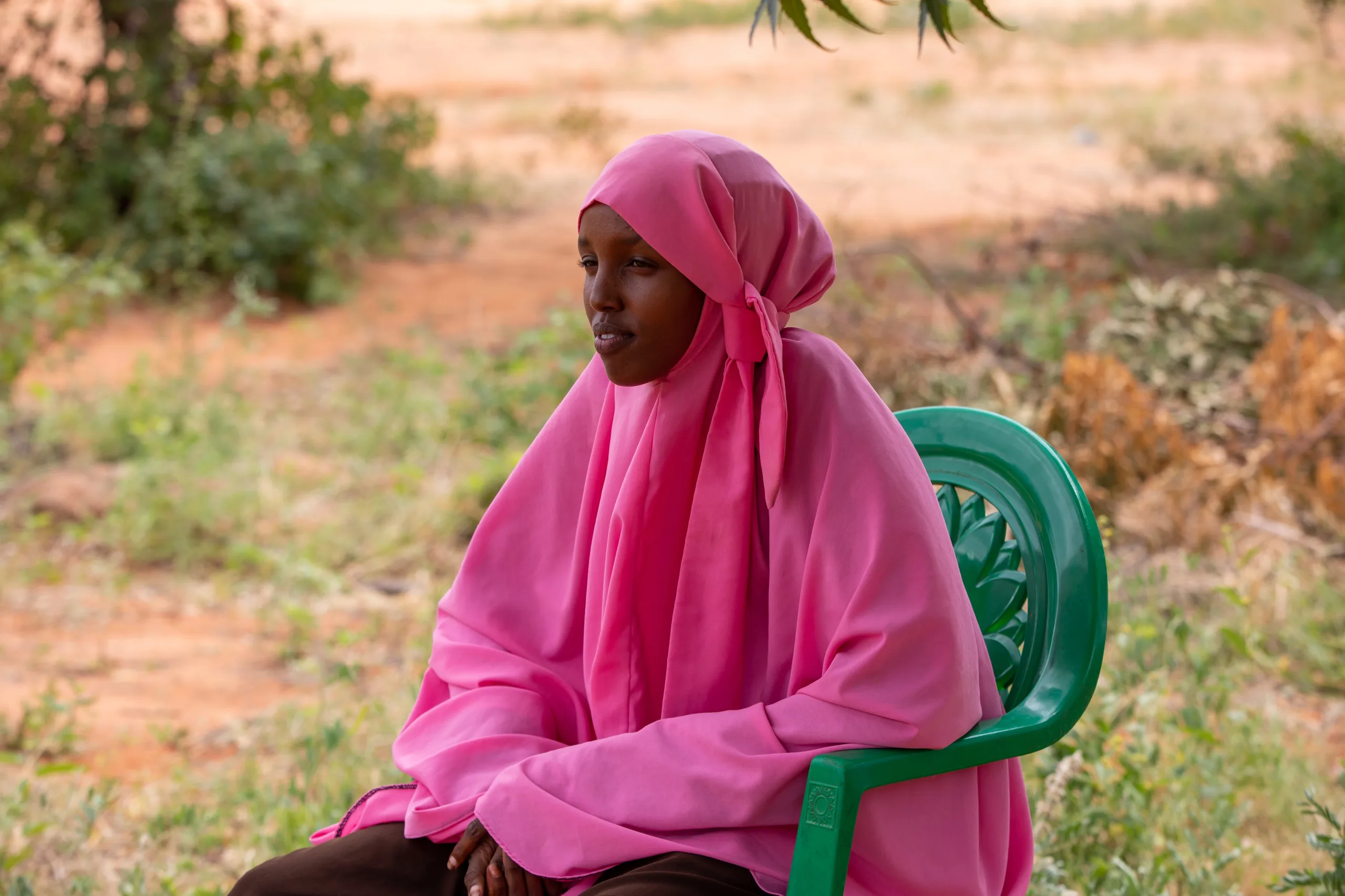
n the arid rangelands of Samburu County, adolescent girls have historically faced some of the steepest barriers to schooling, health, and economic independence anywhere in Kenya. Early marriage remains common, girls are frequently pulled out of school to herd livestock or care for siblings, and distance from health facilities means many never receive accurate information about their own bodies. The Adolescent Girls Empowerment Program was designed to meet girls where they are — in weekly safe-space groups led by trained mentors from their own communities — rather than asking them to travel to services that were never built with them in mind.
Since the program began, AGEP has reached more than 7,500 girls aged 11 to 19 across Samburu’s scattered pastoralist settlements. Each girl joins a small cohort that meets weekly with a female mentor, usually a young woman from the same community who has completed secondary school herself. Sessions combine life-skills and health education with a structured savings component: girls open individual savings accounts, often for the first time in their lives, and learn to set and track financial goals alongside their peers.
The results, tracked over a five-year longitudinal evaluation, have been substantial. Girls in AGEP cohorts were significantly more likely to remain enrolled in school, delay marriage, and correctly answer questions about reproductive health and HIV prevention than girls in comparison communities. Savings group membership translated into tangible assets — livestock, school fees paid in advance, small trading capital — that gave girls a measure of control over decisions that had previously been made entirely by others.
Perhaps the most striking shift has been social rather than economic. Mentors report that girls who once sat silently in mixed community meetings now speak up, propose ideas, and are consulted by their own families on decisions about money and marriage timing. In several sublocations, AGEP alumnae have gone on to become mentors themselves, extending the program’s reach without requiring new external staff — a sign that the model is beginning to sustain itself organically within the community.
“When a girl in Samburu has her own savings account and a group of peers who expect to see her at school on Monday, the pressure to marry her off early starts to lose its grip.” That shift in expectation, more than any single service delivered, is what program staff point to when asked what has changed most since AGEP began.
“When a girl in Samburu has her own savings account and a group of peers who expect to see her at school on Monday, the pressure to marry her off early starts to lose its grip.”
The Population Council continues to track outcomes for AGEP participants as they move into early adulthood, examining whether the gains in schooling, savings, and health knowledge translate into measurable differences in age at first birth, contraceptive use, and household decision-making power over the next decade. Early findings are already informing similar adolescent-girl programming the Council is piloting in Wajir and Garissa, two other counties where girls face comparably steep barriers to opportunity.