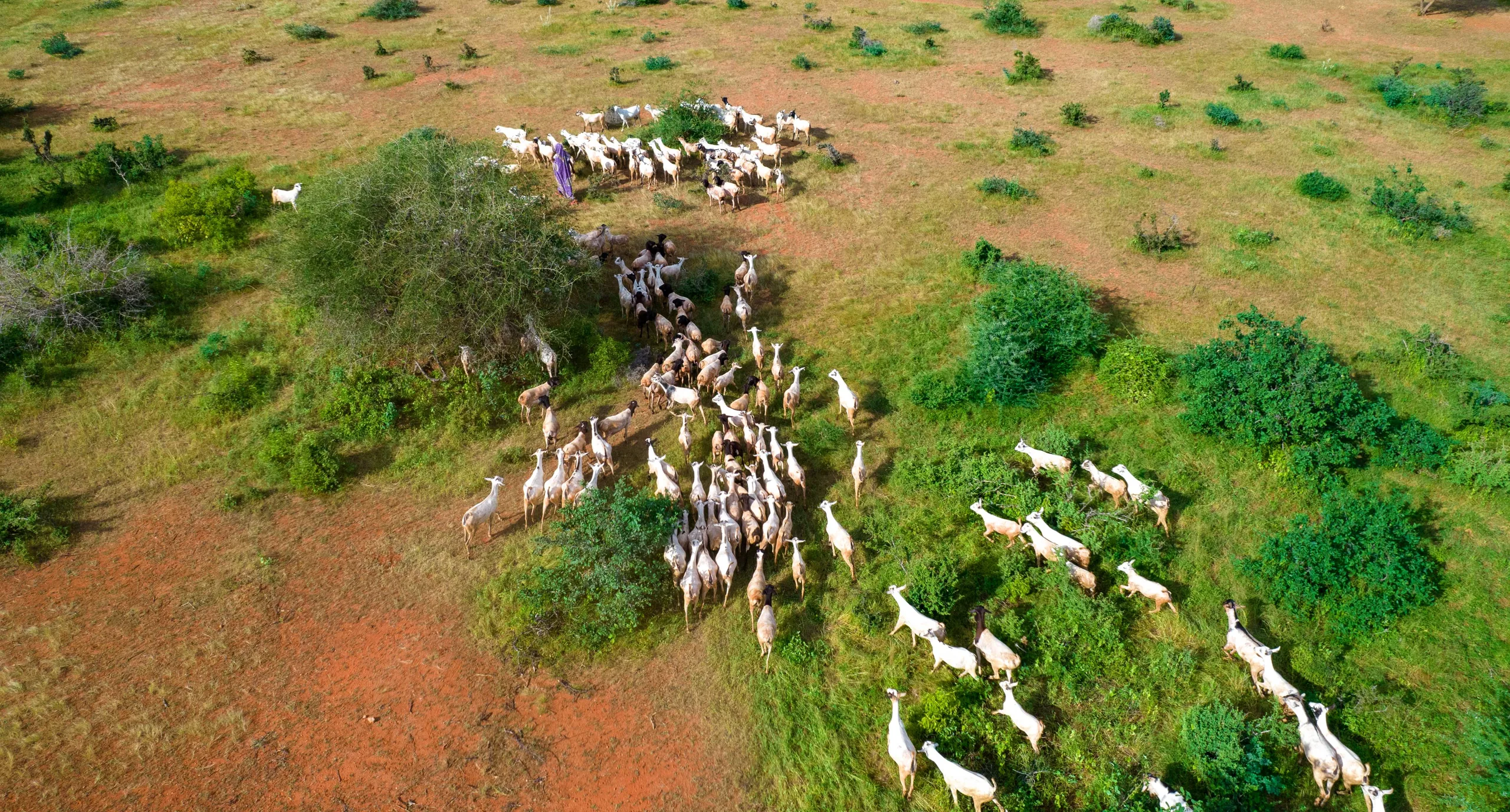
esilience is a word that gets used loosely in development work, often to describe whatever a household happens to do to survive a bad season. Population Council Kenya’s study in Turkana set out to be more precise about it: following the same pastoralist households across three consecutive dry seasons to see, in practical terms, which coping strategies actually protected a family’s long-term prospects — and which only appeared to help in the moment while quietly deepening the crisis underneath.
The distinction matters more than it sounds. Selling a few goats to buy food during a bad month is a coping strategy a herd can usually recover from. Selling the last of the breeding stock, pulling a daughter out of school to reduce household costs, or agreeing to an early marriage that brings in bride wealth are also coping strategies — but each one trades a short-term problem for a much harder long-term one. Surveys that only ask "did the household cope?" tend to miss that difference entirely.
Households in the study were revisited after each dry season rather than surveyed once, which let researchers see the sequence: which families drew down savings or diversified into small trade first, and only turned to more damaging strategies after those options were exhausted, versus which families reached for the costlier strategies early because they had no cushion to begin with. That sequencing is where the real policy lesson sits — the point at which a moderately resourced household tips into decisions it cannot easily reverse.
“The household that sells livestock to get through a season looks the same on paper as the household that pulls a daughter out of school to do it — until you ask what they gave up to get there.” That question, researchers say, is what most single-visit resilience surveys never get around to asking.
“The household that sells livestock to get through a season looks the same on paper as the household that pulls a daughter out of school to do it — until you ask what they gave up to get there.”
The Council is now using the three-season dataset to identify which early interventions — cash transfers timed to the start of a dry season, access to small savings groups, or livestock insurance — appear most effective at keeping households on the recoverable side of that line, work that is informing how resilience programming is sequenced in Turkana and other arid counties facing increasingly frequent drought cycles.