or families living several hours’ walk from the nearest health facility, the difference between a health system that works and one that doesn’t often comes down to a single person: the community health volunteer who already lives on their street, speaks their language, and can recognize a problem before it becomes an emergency. Across Kenya’s reproductive health and HIV programs, the Population Council has spent the past several years investing directly in that role.
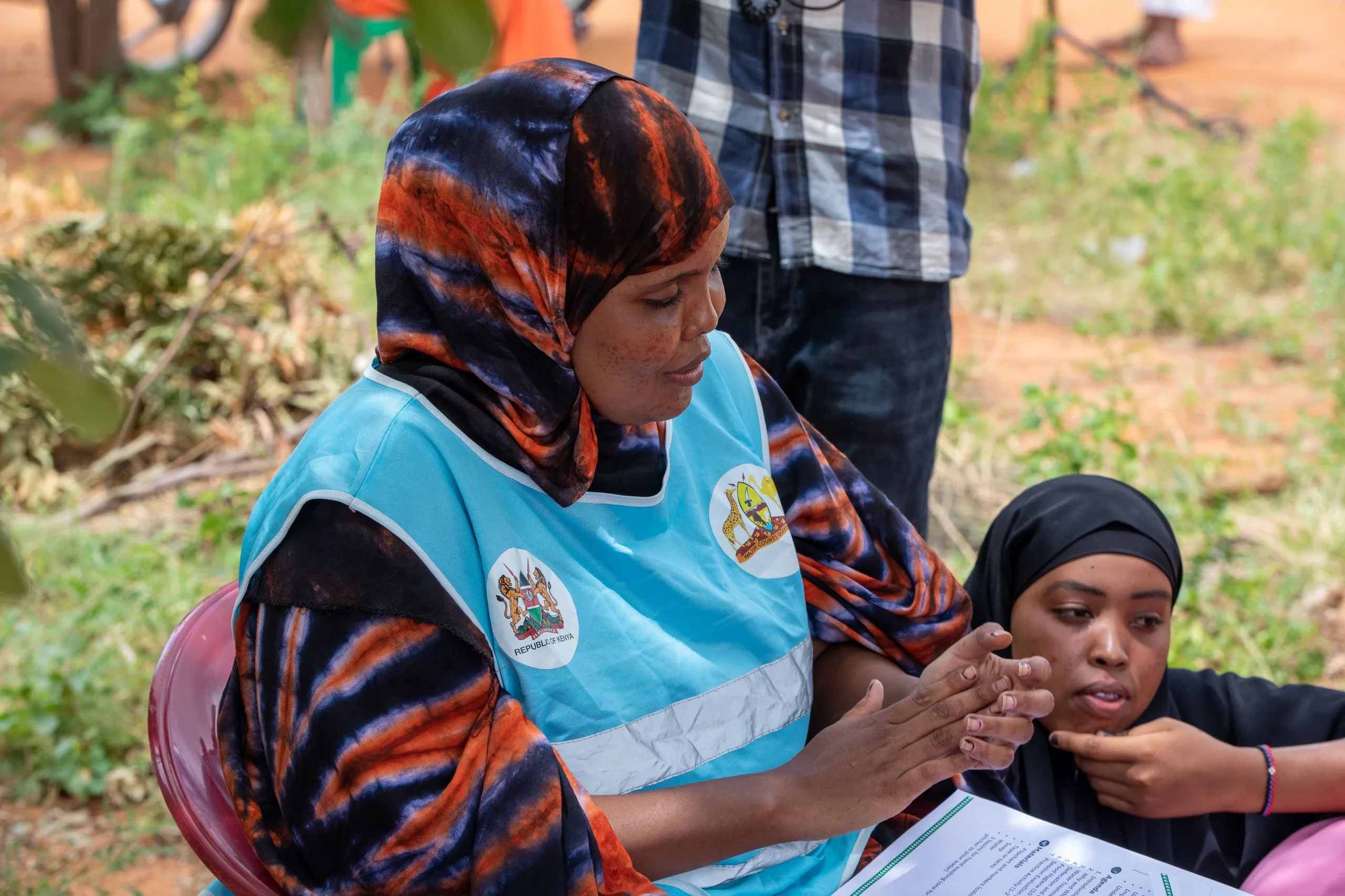
More than 1,200 community health volunteers have now completed structured training under Council-supported programs, spanning informal settlements in Nairobi, arid pastoralist communities in Turkana, coastal counties around Mombasa and Kilifi, and lakeside neighborhoods in Kisumu. Training covers family planning counseling, danger-sign recognition in pregnancy, HIV testing referral, and — increasingly — direct distribution of commodities like self-test kits and short-acting contraceptives that used to require a facility visit.
The model works because it inverts the usual direction of health-seeking. Rather than requiring a household to identify a problem, travel to a facility, and hope to be seen, a trained volunteer is already embedded in the community, conducting routine household visits and building the kind of trust that makes people willing to disclose sensitive health concerns in the first place. In Turkana, where the nearest dispensary can be a full day’s walk from some settlements, volunteers have become the primary point of contact for postpartum family planning counseling for many households.
Evaluation data from program counties shows measurable downstream effects: higher rates of modern contraceptive uptake, earlier initiation of antenatal care, and faster linkage to HIV treatment among households with an active community health volunteer compared to matched households without one. Volunteers themselves report that the training has changed their standing within their own communities — several have gone on to take up more formal roles within county health systems.
The Council continues to work with county governments to formalize supervision structures and commodity supply chains for these volunteers, recognizing that training alone is not enough — a volunteer who runs out of test kits or contraceptive supplies within weeks of being trained quickly loses the trust they worked to build. Strengthening that supply pipeline, alongside continued training, is now a central focus of the program’s next phase.